Friday, May 7, 2010

Comparison between Urban and Rural lifestyles

15 differences
Urban life


  1. High crime rate (Pg 168) (Get up quick or I'll take you off to the police station)
  2. More equality between between men and women (Pg 118) (To Hari's utter amazement, all the people marching in it were women)
  3. Presence of modern technology (Televisions, watches etc.)
  4. Earn more income
  5. More protection against elements (e.g. Monsoon season)
  6. More noise pollution due to cars and more population of people (Pg 121) (Hari strained to listen but the noise of the traffic distracted him)
  7. Formal doctors with proper medication available (Pg 155) (There is a hospital in Alibagh)
  8. No sleeping in public places (Pg 168) (This is no place to sleep.)
  9. More competition in terms of jobs and housing
  10. Presence of electricity
  11. More job prospects (Pg 120) (He held a megaphone to his mouth and began to speak.)
  12. Less environmentally-friendly
  13. Less greenery
  14. More complex lifestyle
  15. Better built housing (Pg 207) (Mr Panwallah was popular in that block.)

Rural life

  1. Low crime rate
  2. Less equality between men and women
  3. Absence of modern technology (Villagers in Thul do not have engines for their fishing boats)
  4. Earn less income (Villagers in Thul can only depend on fishing and farming and it is very competitive)
  5. Less protection against elements as houses can easily catch fire (Villagers in Thul live in thatched huts)
  6. Quiet and tranquil (Absence of cars in Thul)
  7. No formal doctors with proper medication available
  8. Can sleep in public places
  9. Less competition in terms of jobs and housing (Less people in Thul)
  10. No electricity
  11. Less job prospects (farming, fishing and plucking of coconuts)
  12. More environmentally-friendly
  13. More nature and greenery (Pg 4) (The morning light was still soft as it filtered through the web of palm leaves, and swirls of blue wood-smoke rose from fires in hidden huts and mingled with it.)
  14. Simple lifestyle
  15. Live in thatched huts. (Pg 5) (she looked at the hut and knew nothing was as it had been before, and nothing was well either.)

10 similarities

Urban and Rural life

  1. Have doctors
  2. Have appopriate housing to live in
  3. Have their own recreation
  4. Jobs include fishing
  5. Have schools
  6. Equallly religious and superstitious
  7. Celebrate festivals
  8. Have their own culture
  9. Have both the rich and poor
  10. They have their own forms of transport

Village by the Sea Presentation (Importance of Adaptation and Changes)

Changes
  1. A new fertilizer complex is going to be built im Thul.
  2. The paddy fields, the sea, fish and cattle are going to be affected, like being polluted or being removed.
  3. Jobs will be affected, like those fishermen who depend on fishing for a living, since the fish will die due to pollution of the sea.

How has the changes helped Hari?

  1. Hari went to Bombay to look for jobs alone alone, thus making him more courageous and more initiative due to the changes.
  2. He learnt to be independent, which is the main benefit of adapting to a new environment, Bombay.
  3. He learnt different skills, like watch-mending and cooking chapattis.
  4. He has learnt adaptation skills due to change in lifestyle in Bombay.
  5. He learnt to be frugal and thrifty, while being wise at spending money.
  6. He learnt to be caring and helpful towards people as he helped Mr Panwallah while he is ill.
  7. He learnt to be diligent and not be lazy, idling each day.
  8. He learnt to make his own decisions and not always seek advice from his family, thus learning to be decisive.

Adaptations

  1. The people have to go to Bombay to look for jobs.
  2. If they are unable to find jobs in Bombay, they will have to be beggars living in the streets.
  3. Another option would be they be workers at the fertilizer complex, which is definitely not feasible as the job requires skills which they do not have.

How has the adaptations helped Hari?

  1. Hari need not depend on fishing to earn a living as he has learnt watch-mending skills which he can depend on for a living. It will be more competitive to depend on fishing to earn a living in Thul as the fishing is one of the main jobs in Thul and watch-mending would definitely not be competitive as not many people in Thul know how to mend watches. Furthermore, when the fertilizer complex is built in Thul, Hari can help to mend watches for the people who come to Thul.
  2. Hari also learnt to be independent as the new environment and the change in lifestyle forces him to support himself without the help of his family.
  3. If people go to Thul to work at the fertilizer complex, there will be more jobs in Bombay.
  4. He learnt that being laxy would not do him good in the future.
  5. He also met many kind and helpful people like Jagu and Mr Panwallah.

Saturday, May 1, 2010

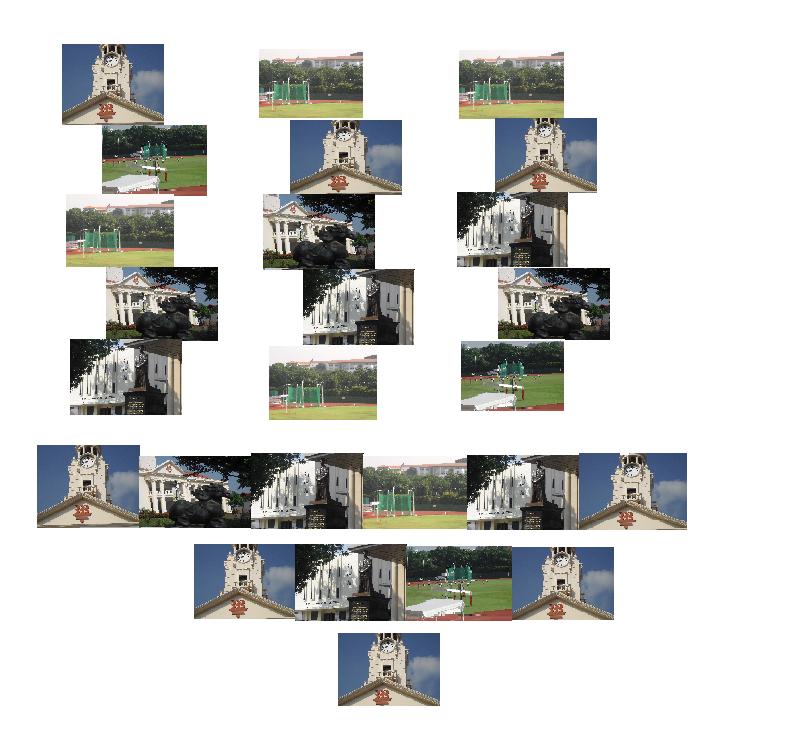
Photo Montage


Hwa Chong Institution has many statues and places which is of important significance, they are the Tan Kah Kee statue, the Kong Chian library, and others. All these have significant historical value, and makes up the rich Hwa Chong history, which is over 90 years. The guiding principle is 饮水思源,which means paying gratitude to those who fought to make the present possible. One must not forget to whom one is indebted, whereas the philosophy is live with passion, lead with compassion.

Thursday, April 22, 2010

A Modern Fairytale

A) Cinderella

  1. Cinderella's mother was dead and her father married a widow with two dayghters. Het stepmother did not like her and only left the bad things for her.
  2. Cinderella was not allowed to rest and worked all day. A ball was to be held and Cinderella was not allowed to go.
  3. A fairy turned her ragged dress into a beautiful one and sent her to the ball in a couch with seven white horses. She then had a wonderful time at the ball.
  4. Cinderella married the prince and lived happily ever after.

Hari and Lila's Story

  1. Their mother was sick and their father was a drunkard. They had to take care of themselves and life was hard.
  2. Hari could not find a job and they could hardly carry on in life.
  3. When Hari went to Bombay, he found a job and learnt watch-mending skills from Mr Panwallah.
  4. Hari earned enough money and has made plans for the future including mending watches to earn money. Their mother was also recovered as the Mr De Silva sent her to the hospital to seek proper medication.

B) When Hari was in Bombay, he did not receive help of magical nature. It was partly due to Jagu's help by giving him a job in his shop and Mr Panwallah's help by teaching him watch-mending skills. It was also partly due to Hari's ability to adapt to a new environment and work hard.

C) I agree that The Village by the Sea is an adventure story to a large extent. An adventure story is a story based on the adventure pattern which is a person goes on an adventure to accomplish a mission. Then he faces problems. However, he recieves help from other people and manages to overcome the obstacles. Finally, he accomplishes the mission and returns victorious. In The Village by the Sea, Hari goes to Bombay to find a job. He had difficulties adapting. Jagu and Mr Panwallah helps him to overcome the problems. Hari managed to earn some money and had learnt watch-mending skills.

D) In The Village by the Sea, Hari and Lila are the protagonists. Lila was cool-headed as she was not angry or upset when Hari left. She only felt confused. She was able to prioritize well and had a positive mindset. She felt that life must go on and did not kept on worrying for Hari. Hari was hardworking for Hari. Hari was hardworking and worked hard in Bombay. He was also courageous enough to go to Bombay alone to find work. He was also responsible to take care of the family.

Thursday, April 1, 2010

Amish Lifestlye Reflection

The Amish people separated from the society because they are very devout in their faith and they have been using horse-drawn power to carry out daily routines such as using bullock carts as a mode of transportation. Rejecting labour-saving technologies that might make one less dependent on community is because of their anti-individualist orientation. They do not permit electricity or telephones in their homes. By restricting access to television, radio, and telephones, the Amish are better able to keep the modern world from intruding into their home life. They value splicity and self denial over comfort, convenience and leisure. The Amish have long preferred farming as a way of life instead of doing things which include technology as in their perspective, they think that families can be best maintained in a rural environment and families are very important to them.
Although families are very important and family harmony is always maintained, disobedience of children is never allowed. Dissatisfaction can be verbally expessed but profanities are prohibited one can expect swift punishment. For Amish chiildren, they can only graduate from formal education after eighth grade but they have to learn how to do adult tasks after that.
The Amish believe that classroom learning is insufficient, hence the boys learn farming and go to the field and barn with their father and the girls learn homemaking skills, working inside the house, alongside their mother. To the Amish, farming is not really a job or a career, but part of their life which can help in nurutring families in values such as hardwork, frugality, responsibility, simplicity and family cooperation. Horses play an important role in farming as they plow, cultivate and harvest crops.
The Amish do not really do anything for recreation as they appreciate and would prefer simplivity. All they do for recreation is barn-raising and quilt-making and other things that we would feel boring and tiring. They enjot the simplicity of these activities where they learn the importance of teamwork, for example, building a barn. In general, they enjoy doing activities that allow them to work with one another apart from making a quilt.
In my opinion, there are some advantages of leading an Amish lifestlye. Firstly, Amish people can lead a peaceful and undisturbed lifestlye and do not really have much stress, unlike in the modern society where it is very hectic and busy. In the modern society, we do not even have time to connect with our relatives and friends and to bond with them, unlike the Amish who spend of their time socializing with anyone. Also, by leading an Amish lifestyle, we can, in a way, save the Earth, as by using electricity and modern machinery, it will emit carbon dioxide and carbon monoxide, which are very harmful to the Earth. Moreover, we will not have any distractions in our life if we cannot play compter games. In this way, we will be able to focus on our education.
However, there are definitely disadvantages of it. One disadvantage is that for most of us, we are usually very active and may not be able to tolerate the extreme tranquilness and stillness in the area. There are also not many sports we can do over there. Furthermore, we cannot have a share of the modern technology out there and we will definitely be tempted by the use of it. we will also not know about any discoveries made or anything, we will only know what is happening in the area we are living in.
Hence, in my point of view, I will choose not to lead an Amish lifestyle.

Friday, March 26, 2010

Resource Room Answers (Topic: Pre)

  1. I like to take a prepandial walk to work up my appetite for dinner.
  2. I don't like it when the networks preempt my favourite TV shows because of sports.
  3. One of the jobs of the meteorologist on the news is to predict tomorrow’s weather.
  4. Just as a precaution, I always lock the car doors when I am driving.
  5. Which of these coats do you prefer to wear tonight?
  6. I don't think Mike heard a word I said because he was so preoccupied about his sick sister.
  7. We got to the concert at the symphony hall just in time--we barely sat down before the conductor started the prelude.

Resource Room Answers (Topic: Bio)

  1. My brother had a biopsy done on the lump on his elbow.
  2. A biology class is where you learn about living things.
  3. You would have to write your own autobiography.
  4. Termites could not eat wood without other animals living inside them that digest the wood; this is an example of symbiosis.
  5. An antibiotic will help cure some diseases like strep throat.
  6. Things that might spread an infection at a hospital have a biohazard label on them.
  7. When fish glow in the dark it is called bioluminescence.
  8. I want to read the biography of the first President of the United States.
  9. The desert, the swamps and the rain forest are all part of the big biosphere.
  10. If you put something biodegradable in the dump, eventually it will rot away.