A) The writer was feeling sad. For the evidence, we are going to include the line “Counting bells knelling classes to a close” as this shows that he feels time is going pass really slowly and this was due to the fact he is really sad when he heard the news of his sibling dying. The writer also felt embarrassed and this can be proven from the lines in stanza 3, evident when the strangers told him they were “sorry for the trouble” and “whispering informed strangers that he was the eldest” made him feel embarrassed. He also feel regretful as the poem states that “I saw him for the first time in six weeks” this line shows that the writer had last seen his brother 6 weeks ago . However, his brother is now dead. Thus, he is regretful as he feel that he should spend more time with his brother and cherish him more while he is alive.
B) The speaker uses several literal devices. The first one he used is onomatopoeia. This can be supported from stanza 3 of the poem. In the line “the baby cooed and laughed and rocked the pram”, “cooed and laughed” is the onomatopoeia. This sets a very awkward mood as it is ironic how the baby is ignorant about the surroundings and still being so happy when everyone else is so sad. The other literal device used is personification. The line “And candles soothed the bedside” showed the use of a personification. This helped to lessen the heavy and depressed mood in the poem, as the candles seem to bo comforting the speaker and the people present.
Thursday, August 19, 2010

Analysis of Mid Term Break
This poem is mainly focusing on the speaker’s childhood memory. This was a really saddening break, not a relaxing and happy one.
The first stanza is informing us that the speaker is waiting at the sick bay for his neighbor to fetch him and does not make up a clue that what was the purpose of the break. However, the fact that the speaker is waiting at the sick bay give the sense that something is wrong. Also, the word “kneeling” describes the slow steady strokes of a bell at a funeral service like the sound of an old school bell announcing the changes of class in school. The use of the word 'knelling' rather than 'tolling' for the school bell has connotations of death.
The second stanza shows how devastating this tragic accident affected the speaker’s family. The fact that “He had always taken funerals in his stride” shows that this tragic accident is a really huge blow to his father as the speaker saw his father crying. In contrast, in the third stanza, the baby 'cooed and laughed and rocked the pram', showing that in some aspects, family life went on as usual and that the baby was immature and did not understand what was happening.
The third and fourth stanzas are linked by enjambment and describes the speaker’s feelings on confronting the people who paid their respects. The speaker also felt embarrassed as the old man shook his hand and expressed his sorrow. This was probably uncomfortable and uncommon to the speaker as he was in a situation of reversed role. He was also knowledgeable about the “whispers” that he was the eldest child in the family.
The second and fifth stanzas are also linked and show how differently the speaker’s mother reacted as compared to his father after the tragic accident. As she 'coughed out angry tearless sighs', it shows that she was too upset to cry and probably did not have any tears to cry out anymore.
In the fifth stanza, Heaney describes in a way that the speaker did not realize the body was his brother’s as the poem mentioned that the ambulance brought the 'corpse'. However, in the sixth stanza, the speaker realized it as he went alone to see the body of his brother. He describes that the presence of snowdrops and soothed his feelings. The speaker again uses enjambment to link this stanza with the seventh, mentioning that his brother now looked paler than the last time he had seen him six weeks previously. The metaphor 'Wearing a poppy bruise on his left temple', poppies being colour of blood as well as a sign of the dead. The final line of the seventh stanza tells us that the little boy was not ran over by the car but banged on one side as he had no “gaudy scars”.
'Mid-Term Break' ends with a single line 'A four foot box, a foot for every year' describes how young the boy was and how small the coffin was. The poem begins with devoid of emotion. Then it progresses into a phase of describing discomfort and difficult emotions in the presence of strangers.
The first stanza is informing us that the speaker is waiting at the sick bay for his neighbor to fetch him and does not make up a clue that what was the purpose of the break. However, the fact that the speaker is waiting at the sick bay give the sense that something is wrong. Also, the word “kneeling” describes the slow steady strokes of a bell at a funeral service like the sound of an old school bell announcing the changes of class in school. The use of the word 'knelling' rather than 'tolling' for the school bell has connotations of death.
The second stanza shows how devastating this tragic accident affected the speaker’s family. The fact that “He had always taken funerals in his stride” shows that this tragic accident is a really huge blow to his father as the speaker saw his father crying. In contrast, in the third stanza, the baby 'cooed and laughed and rocked the pram', showing that in some aspects, family life went on as usual and that the baby was immature and did not understand what was happening.
The third and fourth stanzas are linked by enjambment and describes the speaker’s feelings on confronting the people who paid their respects. The speaker also felt embarrassed as the old man shook his hand and expressed his sorrow. This was probably uncomfortable and uncommon to the speaker as he was in a situation of reversed role. He was also knowledgeable about the “whispers” that he was the eldest child in the family.
The second and fifth stanzas are also linked and show how differently the speaker’s mother reacted as compared to his father after the tragic accident. As she 'coughed out angry tearless sighs', it shows that she was too upset to cry and probably did not have any tears to cry out anymore.
In the fifth stanza, Heaney describes in a way that the speaker did not realize the body was his brother’s as the poem mentioned that the ambulance brought the 'corpse'. However, in the sixth stanza, the speaker realized it as he went alone to see the body of his brother. He describes that the presence of snowdrops and soothed his feelings. The speaker again uses enjambment to link this stanza with the seventh, mentioning that his brother now looked paler than the last time he had seen him six weeks previously. The metaphor 'Wearing a poppy bruise on his left temple', poppies being colour of blood as well as a sign of the dead. The final line of the seventh stanza tells us that the little boy was not ran over by the car but banged on one side as he had no “gaudy scars”.
'Mid-Term Break' ends with a single line 'A four foot box, a foot for every year' describes how young the boy was and how small the coffin was. The poem begins with devoid of emotion. Then it progresses into a phase of describing discomfort and difficult emotions in the presence of strangers.
Wednesday, July 21, 2010
Poetry (Famous People)
A is for Albert Einstein, he is smart;
B is for Brad Pitt, he likes to go to the mart;
C is for Cameron Diaz, she is a girl;
D is for David Beckham, who likes to twirl;
E is for Elton John, who likes a specific song;
F is for Fernando Torres, who plays all day long;
G is for George Bush, he is like a lord;
H is for Henry Ford, he discovered Ford;
J is for Johnny Depp, he loves to wear bags with sling;
K is for Katie Parry, she loves to sing;
L is for Lance Armstrong, his handicapped at a glance;
M is for Michael Jackson, he just loves to dance;
N is for Nick-Falbo, who has a voice that is low;
O is for Oprah Winfrey, who has her own show;
P is for Paula Abdul, she is good in English;
Q is for Queen Latifah, I do not think she is good in Spanish;
R is for Roger Federer, he likes tennis if you cannot tell ;
S is for Simon Cowell, judging is his hobby if you know him well;
T is for Tiger Woods, must I tell you who he is;
U is for Usher Raymond, well you should know this.
B is for Brad Pitt, he likes to go to the mart;
C is for Cameron Diaz, she is a girl;
D is for David Beckham, who likes to twirl;
E is for Elton John, who likes a specific song;
F is for Fernando Torres, who plays all day long;
G is for George Bush, he is like a lord;
H is for Henry Ford, he discovered Ford;
J is for Johnny Depp, he loves to wear bags with sling;
K is for Katie Parry, she loves to sing;
L is for Lance Armstrong, his handicapped at a glance;
M is for Michael Jackson, he just loves to dance;
N is for Nick-Falbo, who has a voice that is low;
O is for Oprah Winfrey, who has her own show;
P is for Paula Abdul, she is good in English;
Q is for Queen Latifah, I do not think she is good in Spanish;
R is for Roger Federer, he likes tennis if you cannot tell ;
S is for Simon Cowell, judging is his hobby if you know him well;
T is for Tiger Woods, must I tell you who he is;
U is for Usher Raymond, well you should know this.
Monday, May 24, 2010
Typical day in school by Tay Wei Sheng
As the morning school bell tore the silent air apart,
It signalled the start of another fun and enriching school day.
Some listened attentively and assiduously copied down notes,
while some just doodled and drowned in the teacher's ponderous monotone.
As the recess bell rang shrilly,
Everyone zoomed out like rockets, signalling a hubbub of activity.
Some went to eat as hunger was a devil, prodding their stomachs relentlessly,
while some went to play, having a whale of their time.
As the dismissal bell sliced the air like a razor-sharp knife,
It signalled the end of another fun and enriching school day.
Some idled in school, reluctant to go home,
while some rushed home, though just released from firing squad.
While everyone looked forward to the next school day...
It signalled the start of another fun and enriching school day.
Some listened attentively and assiduously copied down notes,
while some just doodled and drowned in the teacher's ponderous monotone.
As the recess bell rang shrilly,
Everyone zoomed out like rockets, signalling a hubbub of activity.
Some went to eat as hunger was a devil, prodding their stomachs relentlessly,
while some went to play, having a whale of their time.
As the dismissal bell sliced the air like a razor-sharp knife,
It signalled the end of another fun and enriching school day.
Some idled in school, reluctant to go home,
while some rushed home, though just released from firing squad.
While everyone looked forward to the next school day...
Introduction to Figurative Language
1) In the poem, I Wandered Lonely As A Cloud, an example of a simile is "I wandered lonely as a cloud", while examples of personification are: "Fluttering and dancing in the breeze", "Tossing their heads in a sprightly dance.", "The waves beside them danced" and "Out-did the sparkling leaves in glee." The poet chose a cloud to be a simile in his poem as a cloud usually floats very slowly in the sky and its movement is barely visible. Thus, it best describes the loneliness of the person in the poem as it shows that the person is very lonely and can only move around aimlessly. In the statements showing examples of personification, the poet has used words like dancing, sprightly and glee, to show the comparison between the person and others as a form of emphasis.
2) I like this poem as it is very simple and easy to understand, yet leaves me a great impression after reading it. The poem shows great use of simile and personification, though it does not have any metaphors. The similes and personification used show vast contrast between the feelings and atmosphere of the person and others. This emphasises hugely on the lonely person which i the main character in the poem and has successfully conveyed the message what the poet wants to tell the reader which makes it easy to understand the poem, thus leaving a great impression and letting the reader to enjoy reading it.
Favourite Poem (I Wandered Lonely As A Cloud)
I wandered lonely as a cloud
That floats on high o'er vales and hills,
When all at once I saw a crowd,
A host, of golden daffodils;
Beside the lake, beneath the trees,
Fluttering and dancing in the breeze.
Continuous as the stars that shine
And twinkle on the milky way,
They stretched in never-ending line
Along the margin of a bay:
Ten thousand saw I at a glance,
Tossing their heads in sprightly dance.
The waves beside them danced, but they
Out-did the sparkling leaves in glee;
A poet could not be but gay,
In such a jocund company!
I gazed—and gazed—but little thought
What wealth the show to me had brought:
For oft, when on my couch I lie
In vacant or in pensive mood,
They flash upon that inward eye
Which is the bliss of solitude;
And then my heart with pleasure fills,
And dances with the daffodils.
That floats on high o'er vales and hills,
When all at once I saw a crowd,
A host, of golden daffodils;
Beside the lake, beneath the trees,
Fluttering and dancing in the breeze.
Continuous as the stars that shine
And twinkle on the milky way,
They stretched in never-ending line
Along the margin of a bay:
Ten thousand saw I at a glance,
Tossing their heads in sprightly dance.
The waves beside them danced, but they
Out-did the sparkling leaves in glee;
A poet could not be but gay,
In such a jocund company!
I gazed—and gazed—but little thought
What wealth the show to me had brought:
For oft, when on my couch I lie
In vacant or in pensive mood,
They flash upon that inward eye
Which is the bliss of solitude;
And then my heart with pleasure fills,
And dances with the daffodils.
Thursday, May 20, 2010
My reflections after eating at a Little India restaurant
On 14 May, our Language Arts teacher, Ms Kala, brought our class, as well as others, to a Little India restaurant, called Spice Queen) to have a taste of Indian food, especially chappatti, after going through Village by the Sea with us. Our teacher chose that restaurant as it was quite a famous one and the chef, as well. The chef, Chef Devagi Sanmugam, is an author of 16 cookbooks, as well as a food columnist for magazines. She also owns a culinary consultancy firm Devagi's Epicurean World Pte Ltd.
At the restaurant, we were packed like sardines and fortunately, my group of friends and I quickly got ourselves a seat each. For hygiene's sake, we were told to wash our hands before we could eat. After that, Ms Kala introduced Chef Devagi Sunmugam briefly to us and the chef herself introduced Indian food to us and we indeed gained new insights. Without further ado, we took the serviette and queued up to take the food. The snake-like queue was really long and each of us waited a long time before we got our food. However, a number of us did not have a chance to taste the tendoori chicken as it went out and it was apparently not enough for everyone of us. However, the service there was really good and before we got to the place where got our food, an amicable female staff gave each of us a piece of koropok and gave those a second time if they requested for it.
They gave us a variety of dishes, such as Indian rice with gravy, cubed potatoes, tendoori chicken(not for me) and chappatti, not forgetting lime juice. Without it, we will definitely not be able to eat the food. It was really spicy! The rice and chappatti was fine but not for the potatoes. Many of us were complaining about the spiciness and for me, I could literally feel my stomach burning! For some of them, they actually took their own drnk to drink as the lime juice was not enough.
After our stomachs were filled, we went back home ourselves by taking the Little India MRT train as the MRT station was just beside the restaurant. For those who wanted to take school transport back to school, had to wait a little more. I felt that it was indeed an enriching and enjoyable experience for me. Firstly I got to see a famous chef in person and secondly, I learnt more about Indian culture including eating the food with our bare hands. We also got to know about the different kinds of Indian food. Last but not least, I interacted with my friends at the same time and I really enjoyed the entire time.
Friday, May 7, 2010
Comparison between Urban and Rural lifestyles
15 differences
Urban life
Urban life
- High crime rate (Pg 168) (Get up quick or I'll take you off to the police station)
- More equality between between men and women (Pg 118) (To Hari's utter amazement, all the people marching in it were women)
- Presence of modern technology (Televisions, watches etc.)
- Earn more income
- More protection against elements (e.g. Monsoon season)
- More noise pollution due to cars and more population of people (Pg 121) (Hari strained to listen but the noise of the traffic distracted him)
- Formal doctors with proper medication available (Pg 155) (There is a hospital in Alibagh)
- No sleeping in public places (Pg 168) (This is no place to sleep.)
- More competition in terms of jobs and housing
- Presence of electricity
- More job prospects (Pg 120) (He held a megaphone to his mouth and began to speak.)
- Less environmentally-friendly
- Less greenery
- More complex lifestyle
- Better built housing (Pg 207) (Mr Panwallah was popular in that block.)
Rural life
- Low crime rate
- Less equality between men and women
- Absence of modern technology (Villagers in Thul do not have engines for their fishing boats)
- Earn less income (Villagers in Thul can only depend on fishing and farming and it is very competitive)
- Less protection against elements as houses can easily catch fire (Villagers in Thul live in thatched huts)
- Quiet and tranquil (Absence of cars in Thul)
- No formal doctors with proper medication available
- Can sleep in public places
- Less competition in terms of jobs and housing (Less people in Thul)
- No electricity
- Less job prospects (farming, fishing and plucking of coconuts)
- More environmentally-friendly
- More nature and greenery (Pg 4) (The morning light was still soft as it filtered through the web of palm leaves, and swirls of blue wood-smoke rose from fires in hidden huts and mingled with it.)
- Simple lifestyle
- Live in thatched huts. (Pg 5) (she looked at the hut and knew nothing was as it had been before, and nothing was well either.)
10 similarities
Urban and Rural life
- Have doctors
- Have appopriate housing to live in
- Have their own recreation
- Jobs include fishing
- Have schools
- Equallly religious and superstitious
- Celebrate festivals
- Have their own culture
- Have both the rich and poor
- They have their own forms of transport
Village by the Sea Presentation (Importance of Adaptation and Changes)
Changes
- A new fertilizer complex is going to be built im Thul.
- The paddy fields, the sea, fish and cattle are going to be affected, like being polluted or being removed.
- Jobs will be affected, like those fishermen who depend on fishing for a living, since the fish will die due to pollution of the sea.
How has the changes helped Hari?
- Hari went to Bombay to look for jobs alone alone, thus making him more courageous and more initiative due to the changes.
- He learnt to be independent, which is the main benefit of adapting to a new environment, Bombay.
- He learnt different skills, like watch-mending and cooking chapattis.
- He has learnt adaptation skills due to change in lifestyle in Bombay.
- He learnt to be frugal and thrifty, while being wise at spending money.
- He learnt to be caring and helpful towards people as he helped Mr Panwallah while he is ill.
- He learnt to be diligent and not be lazy, idling each day.
- He learnt to make his own decisions and not always seek advice from his family, thus learning to be decisive.
Adaptations
- The people have to go to Bombay to look for jobs.
- If they are unable to find jobs in Bombay, they will have to be beggars living in the streets.
- Another option would be they be workers at the fertilizer complex, which is definitely not feasible as the job requires skills which they do not have.
How has the adaptations helped Hari?
- Hari need not depend on fishing to earn a living as he has learnt watch-mending skills which he can depend on for a living. It will be more competitive to depend on fishing to earn a living in Thul as the fishing is one of the main jobs in Thul and watch-mending would definitely not be competitive as not many people in Thul know how to mend watches. Furthermore, when the fertilizer complex is built in Thul, Hari can help to mend watches for the people who come to Thul.
- Hari also learnt to be independent as the new environment and the change in lifestyle forces him to support himself without the help of his family.
- If people go to Thul to work at the fertilizer complex, there will be more jobs in Bombay.
- He learnt that being laxy would not do him good in the future.
- He also met many kind and helpful people like Jagu and Mr Panwallah.
Saturday, May 1, 2010
Photo Montage
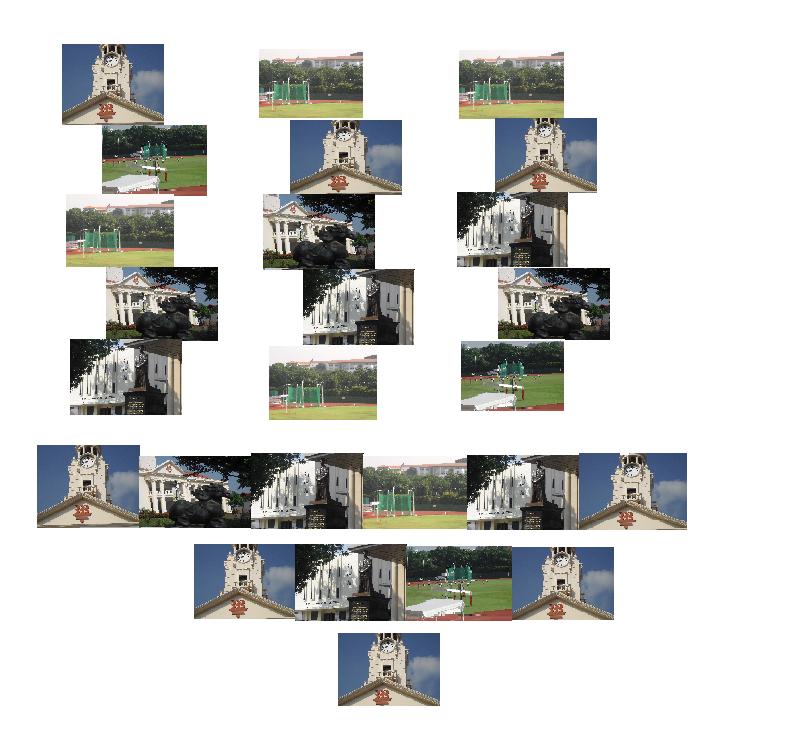
Hwa Chong Institution has many statues and places which is of important significance, they are the Tan Kah Kee statue, the Kong Chian library, and others. All these have significant historical value, and makes up the rich Hwa Chong history, which is over 90 years. The guiding principle is 饮水思源,which means paying gratitude to those who fought to make the present possible. One must not forget to whom one is indebted, whereas the philosophy is live with passion, lead with compassion.
Thursday, April 22, 2010
A Modern Fairytale
A) Cinderella
- Cinderella's mother was dead and her father married a widow with two dayghters. Het stepmother did not like her and only left the bad things for her.
- Cinderella was not allowed to rest and worked all day. A ball was to be held and Cinderella was not allowed to go.
- A fairy turned her ragged dress into a beautiful one and sent her to the ball in a couch with seven white horses. She then had a wonderful time at the ball.
- Cinderella married the prince and lived happily ever after.
Hari and Lila's Story
- Their mother was sick and their father was a drunkard. They had to take care of themselves and life was hard.
- Hari could not find a job and they could hardly carry on in life.
- When Hari went to Bombay, he found a job and learnt watch-mending skills from Mr Panwallah.
- Hari earned enough money and has made plans for the future including mending watches to earn money. Their mother was also recovered as the Mr De Silva sent her to the hospital to seek proper medication.
B) When Hari was in Bombay, he did not receive help of magical nature. It was partly due to Jagu's help by giving him a job in his shop and Mr Panwallah's help by teaching him watch-mending skills. It was also partly due to Hari's ability to adapt to a new environment and work hard.
C) I agree that The Village by the Sea is an adventure story to a large extent. An adventure story is a story based on the adventure pattern which is a person goes on an adventure to accomplish a mission. Then he faces problems. However, he recieves help from other people and manages to overcome the obstacles. Finally, he accomplishes the mission and returns victorious. In The Village by the Sea, Hari goes to Bombay to find a job. He had difficulties adapting. Jagu and Mr Panwallah helps him to overcome the problems. Hari managed to earn some money and had learnt watch-mending skills.
D) In The Village by the Sea, Hari and Lila are the protagonists. Lila was cool-headed as she was not angry or upset when Hari left. She only felt confused. She was able to prioritize well and had a positive mindset. She felt that life must go on and did not kept on worrying for Hari. Hari was hardworking for Hari. Hari was hardworking and worked hard in Bombay. He was also courageous enough to go to Bombay alone to find work. He was also responsible to take care of the family.
Thursday, April 1, 2010
Amish Lifestlye Reflection
The Amish people separated from the society because they are very devout in their faith and they have been using horse-drawn power to carry out daily routines such as using bullock carts as a mode of transportation. Rejecting labour-saving technologies that might make one less dependent on community is because of their anti-individualist orientation. They do not permit electricity or telephones in their homes. By restricting access to television, radio, and telephones, the Amish are better able to keep the modern world from intruding into their home life. They value splicity and self denial over comfort, convenience and leisure. The Amish have long preferred farming as a way of life instead of doing things which include technology as in their perspective, they think that families can be best maintained in a rural environment and families are very important to them.
Although families are very important and family harmony is always maintained, disobedience of children is never allowed. Dissatisfaction can be verbally expessed but profanities are prohibited one can expect swift punishment. For Amish chiildren, they can only graduate from formal education after eighth grade but they have to learn how to do adult tasks after that.
The Amish believe that classroom learning is insufficient, hence the boys learn farming and go to the field and barn with their father and the girls learn homemaking skills, working inside the house, alongside their mother. To the Amish, farming is not really a job or a career, but part of their life which can help in nurutring families in values such as hardwork, frugality, responsibility, simplicity and family cooperation. Horses play an important role in farming as they plow, cultivate and harvest crops.
The Amish do not really do anything for recreation as they appreciate and would prefer simplivity. All they do for recreation is barn-raising and quilt-making and other things that we would feel boring and tiring. They enjot the simplicity of these activities where they learn the importance of teamwork, for example, building a barn. In general, they enjoy doing activities that allow them to work with one another apart from making a quilt.
In my opinion, there are some advantages of leading an Amish lifestlye. Firstly, Amish people can lead a peaceful and undisturbed lifestlye and do not really have much stress, unlike in the modern society where it is very hectic and busy. In the modern society, we do not even have time to connect with our relatives and friends and to bond with them, unlike the Amish who spend of their time socializing with anyone. Also, by leading an Amish lifestyle, we can, in a way, save the Earth, as by using electricity and modern machinery, it will emit carbon dioxide and carbon monoxide, which are very harmful to the Earth. Moreover, we will not have any distractions in our life if we cannot play compter games. In this way, we will be able to focus on our education.
However, there are definitely disadvantages of it. One disadvantage is that for most of us, we are usually very active and may not be able to tolerate the extreme tranquilness and stillness in the area. There are also not many sports we can do over there. Furthermore, we cannot have a share of the modern technology out there and we will definitely be tempted by the use of it. we will also not know about any discoveries made or anything, we will only know what is happening in the area we are living in.
Hence, in my point of view, I will choose not to lead an Amish lifestyle.
Friday, March 26, 2010
Resource Room Answers (Topic: Pre)
- I like to take a prepandial walk to work up my appetite for dinner.
- I don't like it when the networks preempt my favourite TV shows because of sports.
- One of the jobs of the meteorologist on the news is to predict tomorrow’s weather.
- Just as a precaution, I always lock the car doors when I am driving.
- Which of these coats do you prefer to wear tonight?
- I don't think Mike heard a word I said because he was so preoccupied about his sick sister.
- We got to the concert at the symphony hall just in time--we barely sat down before the conductor started the prelude.
Resource Room Answers (Topic: Bio)
- My brother had a biopsy done on the lump on his elbow.
- A biology class is where you learn about living things.
- You would have to write your own autobiography.
- Termites could not eat wood without other animals living inside them that digest the wood; this is an example of symbiosis.
- An antibiotic will help cure some diseases like strep throat.
- Things that might spread an infection at a hospital have a biohazard label on them.
- When fish glow in the dark it is called bioluminescence.
- I want to read the biography of the first President of the United States.
- The desert, the swamps and the rain forest are all part of the big biosphere.
- If you put something biodegradable in the dump, eventually it will rot away.
Thursday, March 25, 2010
Resource Room Answers (Topic: Therm)
- Getting wet on a cool day and staying outside can lead to hypothermia.
- You can get a thermometer that will measure temperature in Fahrenheit or Celsius.
- I have a thermos full of coffee, piping hot.
- A thermal blanket is designed to add a warm layer for cold weather, but not be too warm in warm weather.
- The isothermal showed that it was 32 degrees in Boston, Massachusetts and 30 miles north of Cleveland, Ohio.
- A thermonuclear bomb does more damage than other kinds of bombs, but is very expensive to make.
- Spending too much time in the hot sun can cause hyperthermia , which can be fatal.
- That hypothermia reaction got very, very cold.
- Setting off a thermonuclear bomb is an example of an exothermic reaction because it sends out a lot of heat.
- In Greenland, geothermal energy from hot springs is used to heat houses.
- A tree farmer might want to study isothermalogy.
- That's an interesting rock! A geologist could tell you what it is.
- The thermostat in my car broke, so it overheated.
Resource Room Answers (Topic: Un)
- Unemployment was a big problem in the Great Depression as many businesses shut down and people lost their jobs.
- After a three week battle, the fort gave an unconditional surrender and was taken over.
- When are you going to unveil your new painting?
- I must have been unconscious during the whole movie--I don't remember any of it!
- The crowd at the game got so unruly that the game was stopped until they settled down.
- If you are uncertain about which book to read, I will help you decide.
- It's a good thing your dishes and furniture are unbreakable, with so many unruly children in the house!
- Many people say you should unplug your computer in the thunderstorm so that lightning doesn't harm it.
- It's just unthinkable that he would order roast beef--he is a vegetarian!
- It's unthinkable that my neat brother would ever let his house get untidy.
- He is the most unselfish I know-he would give everything he has away.
Resource Room Answers (Topic: Ject)
- My VCR will not eject my tape.
- The pen became a projectile when it was thrown across the room.
- A diabetic may have to be injected insulin with a needle.
- Do you really know they will get married, or is that just conjecture?
- The school will automatically reject your application if you don't pay the fee first.
Wednesday, March 3, 2010
Discussion & AQ Exercise-Terrorism (Articles:"The Terror Begins At Home" and "Turning The Taliban"
1) The writer was trying to say that the spirit of the American people is not as good as compared to other countries who tried to rebuild the damaged building and return to the targeted bus lines the day after bombing. However, for America, the Twin Towers are still not rebuilt. If the American spirit is strong, the damaged buildings should be rebuilt as a form of defiance and ordinary citizens should be trained to handle disasters and terror attacks.
2) These attempts to lure away thousands of Taliban with oofers of jobs and money and persuading the rest to make peace have not been successful. Evidence such as quotes from Pakistani citizens like "But the young man say it won't work" and "If you are commited to jihad, you won't leave for a mountain of money." are used to support their view.
AQ Exercise
1) Suggestions such as training ordinary citizens to handle disasters and terror attacks and to build resillience instead of letting the government take care of the citizens have relevance for Singapore.
2) Posters and advertisements xan be frequently put up to constantly remind Singaporeans to have the united spirit in them so as to ensure Singaporeans political and social stability. Only with the united spirit, not only can we ensure Singaporean's political and social stability, Singaporeans can also build resillience against terrorism.
Monday, March 1, 2010


Subscribe to:
Posts (Atom)